

About this guide
Pick a real event, explain the choice you made and finish with something the interviewer could observe. The example below is fictional so you can practice the structure with your own experience.
Start where the decision happened
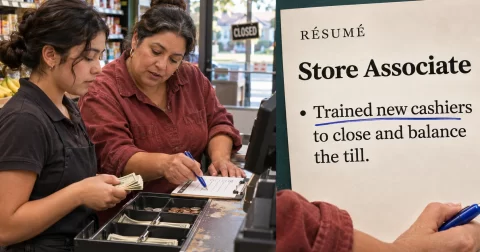
A customer was charged twice. The easy first answer is “I stayed calm and fixed it.” It leaves the interviewer guessing what you actually did. In the longer version, the cashier checks both timestamps, confirms the transactions are separate and asks a supervisor to authorize the reversal. The customer receives a receipt and a reference number.
Give your part the most airtime
MIT describes the situation, task, action and result framework. [1] On a sheet of paper, give the setting one line and your responsibility another. Use the middle of the answer for the checks you performed, the person you consulted and why. End with what happened. If the outcome was imperfect, explain what you changed afterward.
Choose the right story for the question
The duplicate-charge story works for judgment, customer service or following an approval process. It would be a poor choice for “Tell me about a project you led from start to finish” unless you really did lead a larger improvement. Keep a small bank of stories under plain labels: a difficult handoff, a mistake you corrected, a decision you made with incomplete information. Write only the cue words. Memorizing a paragraph can make it hard to answer the question actually asked.
When the interviewer requests a team example, explain where the team's work ends and yours begins. “The manager authorized the refund. I did the transaction check and explained the next steps to the customer” gives credit accurately and shows what the interviewer can evaluate.
Prepare for the question after the answer
A follow-up often asks for reasoning rather than a new story. In the illustrative case, “Why did you compare the timestamps?” gives you room to explain that two entries on a screen could have different causes. “What would you change?” might lead to checking the original receipt earlier. Avoid adding facts after the fact just to make the ending cleaner.
Practice twice with a timer. In the first version, aim to make the sequence understandable to someone who never worked in a store. In the second, remove the store-specific terms and one piece of background. Ask your practice partner what decision they heard you make. If they can identify it without guessing, the example is ready for an interview.
Cut it down for a live conversation
“A customer showed me two charges for one order. I compared the register timestamps, found two posted transactions and asked the shift lead to authorize the duplicate refund. I gave the customer a receipt with the reference number before they left.” Then pause. A good follow-up might be what you would have done if one charge was still pending. Practice with a real example and keep names, account numbers and private details out of it.
Sources
Sources reviewed 2026-11-20. Editorial policy